How Thoughtful Material Choices Today Build the Future
In an era when sustainability often focuses on energy performance or recycled content, the question of longevity may sometimes be overlooked. Yet the buildings of tomorrow will be shaped by the materials architects specify today. Flooring is especially critical: few surfaces work harder, and few contribute more to the character and sense of permanence that public spaces demand.
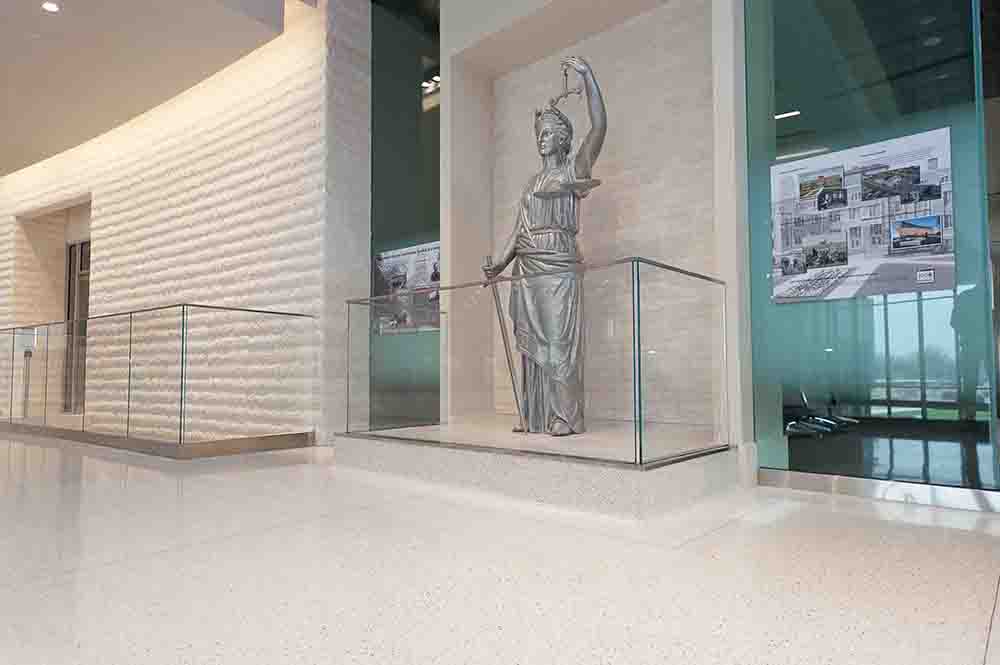
Fentress Architects planned the LEED-certified Johnson County Courthouse in Olathe, Kansas, for long service. “It is designed to serve the community’s needs for at least 75 years, accommodate expected growth, and fulfill the County’s goal to reduce energy consumption by 30 percent,” the firm stated. Terrazzo was integral to that vision: a monumental precast staircase anchors the luminous lobby, and a vast epoxy terrazzo floor with zinc divider strips and mother-of-pearl aggregate conveys durability and dignity. Hand-troweled details—from benches to curbs—were crafted to last as long as the courthouse itself.
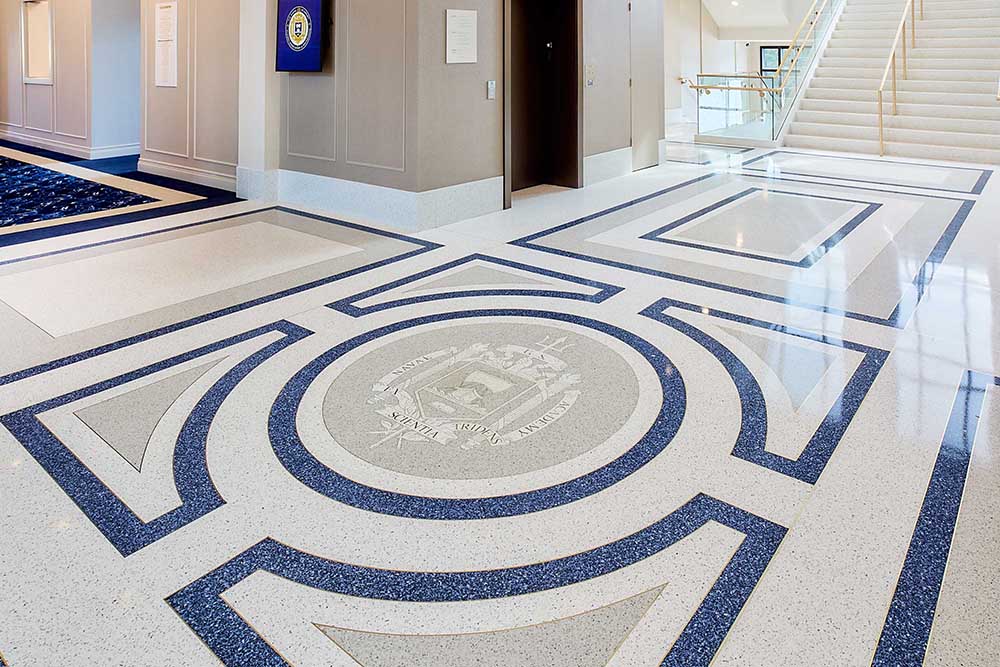
The same mindset guided the design of the U.S. Naval Academy Fluegel Alumni Center in Annapolis, Maryland. Perkins Eastman linked the new building’s design to the school’s 1907 Beaux Arts-style Bancroft Hall and its stone floors while meeting the owner’s requirement for a long-lasting facility.
“Keeping in mind the owner’s desire for a 100-year building, we wanted the lobby to have materials that looked timeless and classic but were also durable enough to use in the highest-traffic area,” the architects noted. Terrazzo, customized with brass inlay, academy colors, and a precisely detailed school seal, delivered both resilience and meaning.
Unlike modular tile or short-life finishes, terrazzo is poured-in-place for decades of continuous use. Its life-cycle economy lies not only in avoiding replacement but in its capacity for repair, restoration, and adaptation as buildings evolve.
As the conversation on sustainable design continues, architects face a critical question: what choices today will still speak with integrity in 2125? Terrazzo offers one answer—an enduring material that carries the function and meaning of a space forward for generations. True sustainability is not just about reducing energy use or meeting certifications; it is about creating buildings that remain relevant, resilient, and beautiful a hundred years from now. For architects who want their work to endure, specifying terrazzo is more than a finish; it’s a commitment to the future.



Read Similar Articles
-
 Blog & News
October 1, 2026
Terrazzo So Good You’ll Want to Step Into History—and Eat Mor Chikin
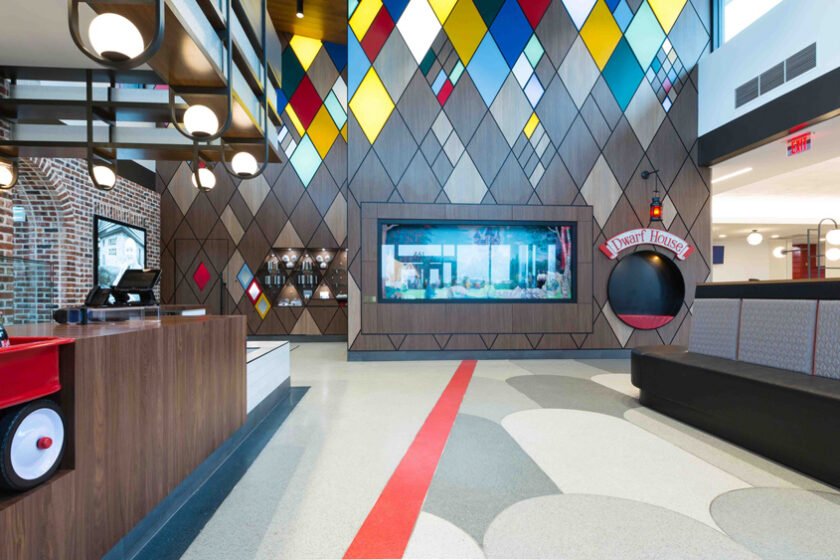
At Hapeville’s Chick-fil-A Dwarf House, terrazzo transforms the space into a story-rich canvas. Diamond patterns, sunbursts, and embedded tributes honor the restaurant’s 1946 origins, ready to stand up to generations of diners.In 2022, the original Chick-fil-A Dwarf House in Hapeville, Georgia, reopened after its first major renovation since 1967. The project doubled the dining space—and presented…
-
 Blog & News
September 15, 2026
Terrazzo in the Age of Biophilic Design:
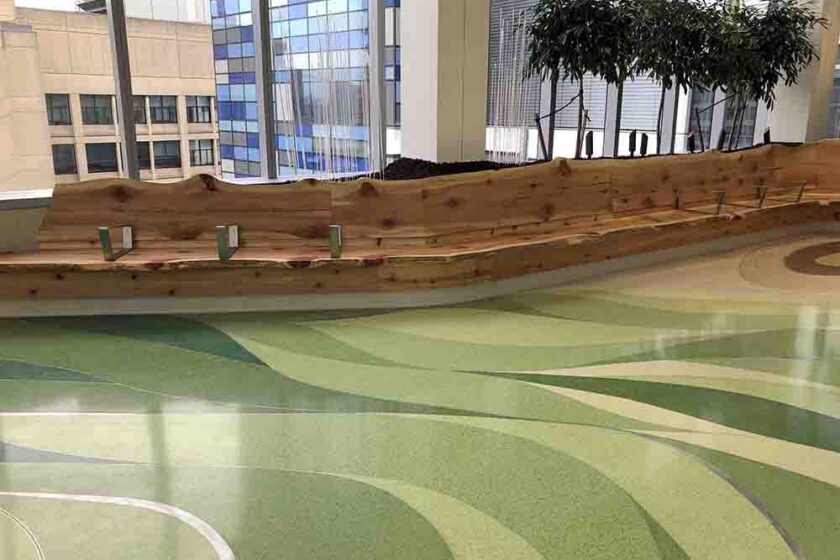
A Floor Plan for Healthier SpacesBoston Children’s Hospital uses terrazzo to bring natural patterns indoors, combining durability, hygiene, and a calming, restorative environment.