
Terrazzo has been used for centuries, and it isn’t going anywhere.
In a design culture focused on the next big thing, such longevity can sometimes be overlooked. A floor that still performs after 100 years may also reflect dated aesthetic choices, but that’s not terrazzo’s fault—it simply outlasts them. When thoughtfully designed, terrazzo can be quietly elegant or unapologetically bold and iconic—for generations.
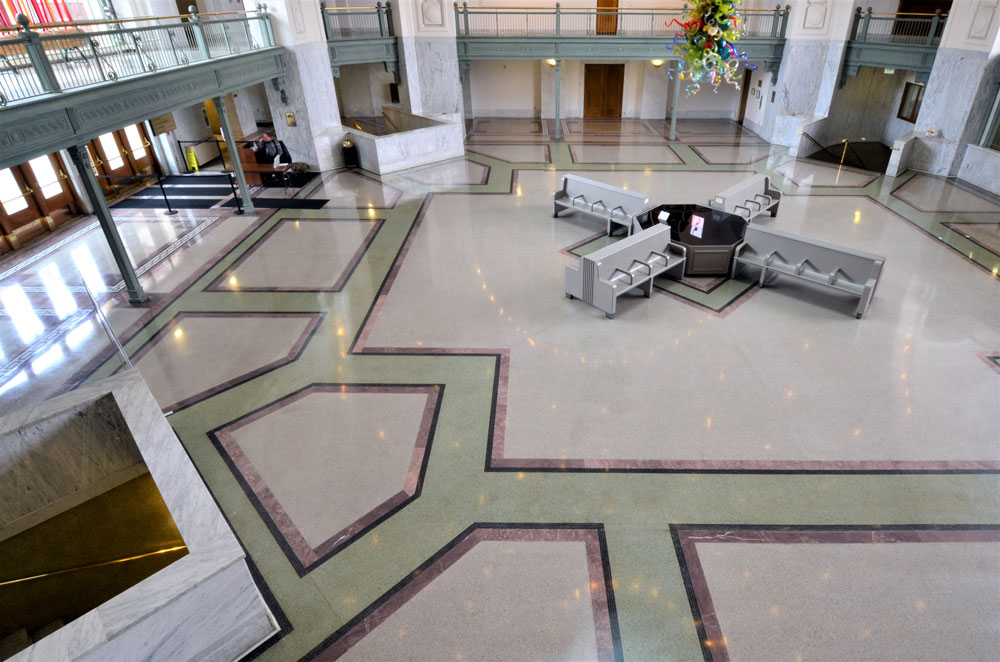
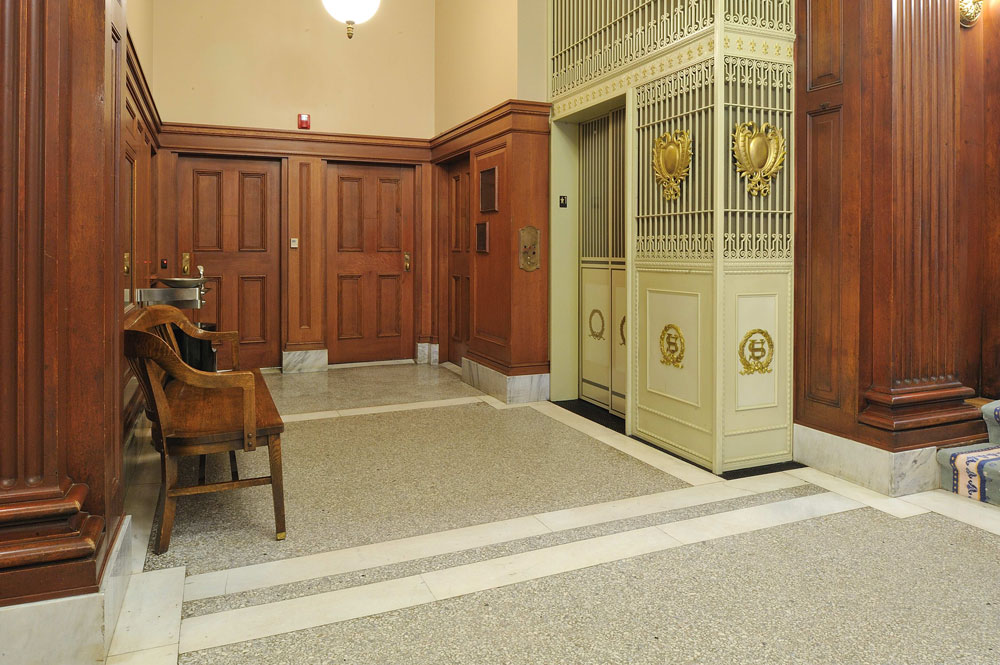
Tacoma century-old courthouse
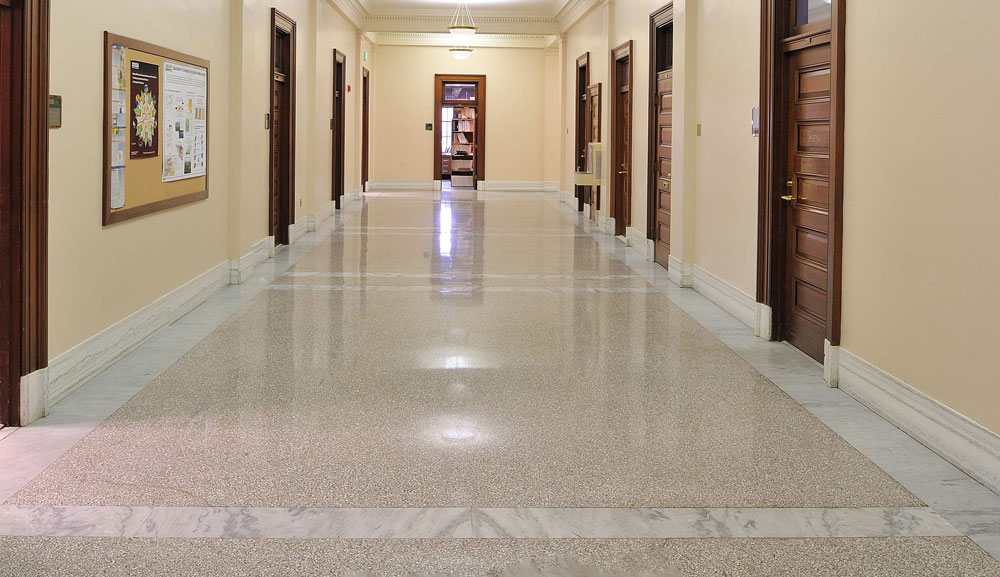
Around 2012, terrazzo floors in four century-old courthouses across the Pacific Northwest were restored. “Once terrazzo is in, it stays forever,” said Rebecca Nielsen of the U.S. General Services Administration. A historic preservation program specialist and LEED-accredited professional, Ms. Nielsen oversees 20 federally registered historic buildings. “It’s easy to maintain, stands up to almost anything, and it’s beautiful,” she added.
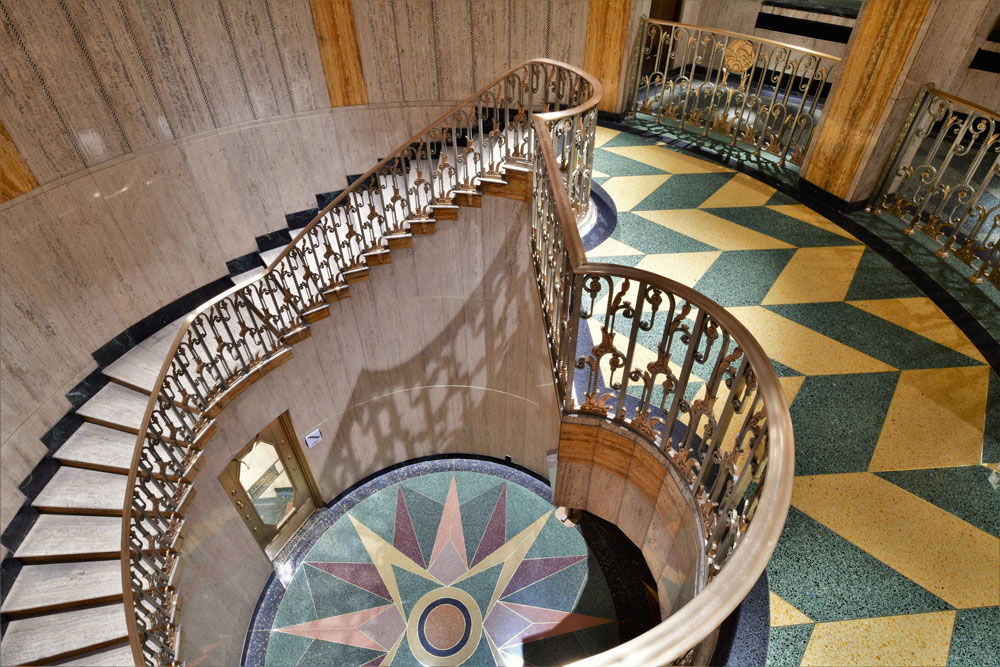
Such longevity shifts responsibility to the designer. The impact of terrazzo is determined by how it’s used. It remains one of the few flooring systems that can be fully customized at any scale, making each installation one of a kind.
With sustainability a growing priority, it’s tough to justify removing a low-maintenance floor that’s still going strong after a century. The greenest floor is generally the one already in place, especially when it can be repaired and restored indefinitely. Because terrazzo outlasts most materials, the design demands staying power, too.
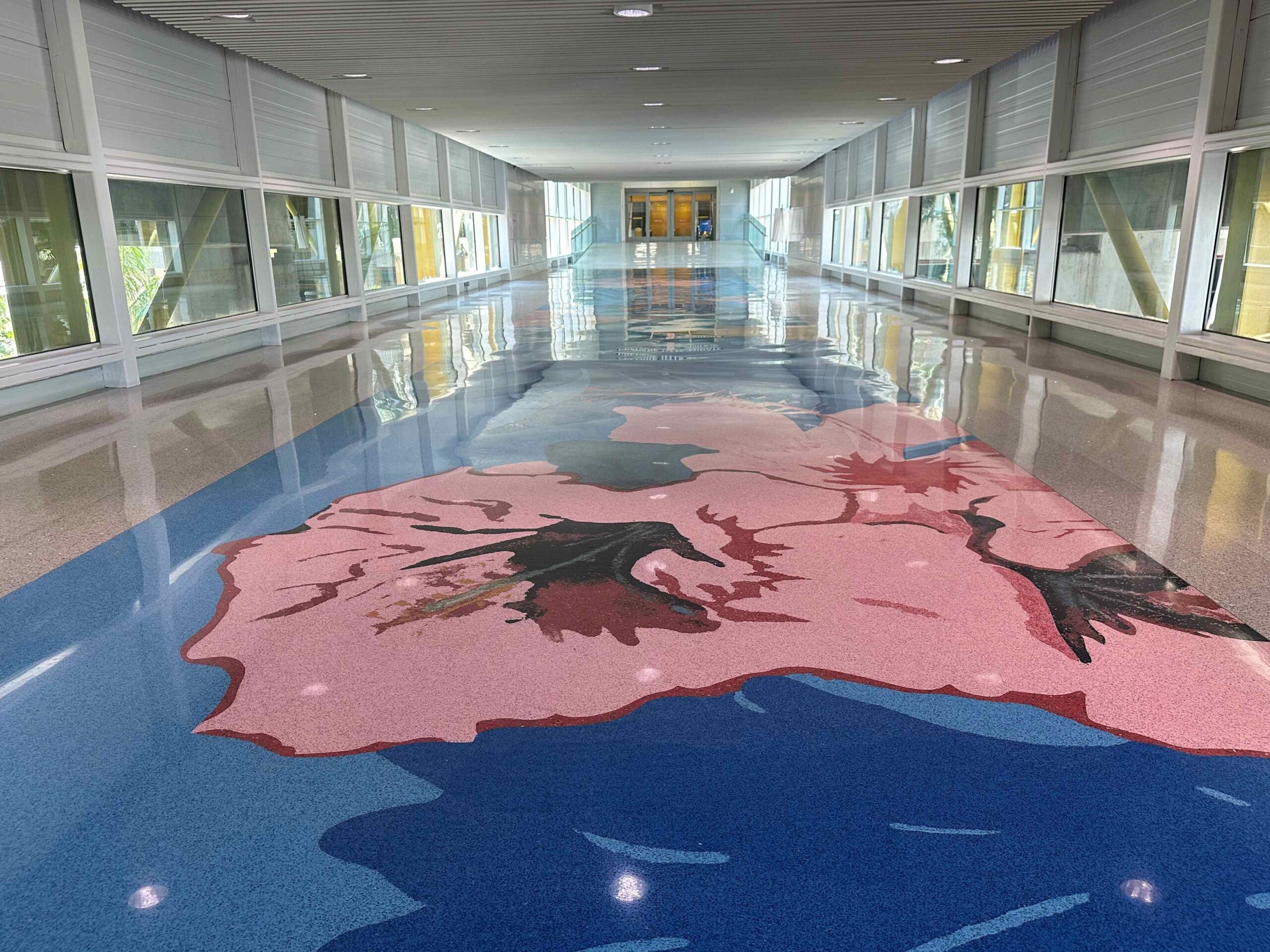
A Journey at Ft.Lauderdale Airport
“It’s the flexibility that draws us to terrazzo—we see it as a canvas,” said architect Daniel Justiniano of Justin Architects in Fort Lauderdale. “But we know that 40 years later it will still be in great shape—that’s the driving force.” Mr. Justiniano directed the installation of a terrazzo public art project in a high-traffic walkway at Fort Lauderdale-Hollywood International Airport that earned the 2025 NTMA Judges’ Choice Art Award.
Today’s terrazzo is more adaptable than ever. It can keep pace with any architectural style, from art deco to contemporary minimalist, and across building types. In airports, schools, hospitals, and high-end retail, architects continue to specify terrazzo because it works: for the project, for the client, and for the long term. In the right hands, it becomes a lasting canvas for branding, school spirit, wayfinding, maps, or large-scale public art.


Read Similar Articles
-
 Blog & News
February 1, 2026
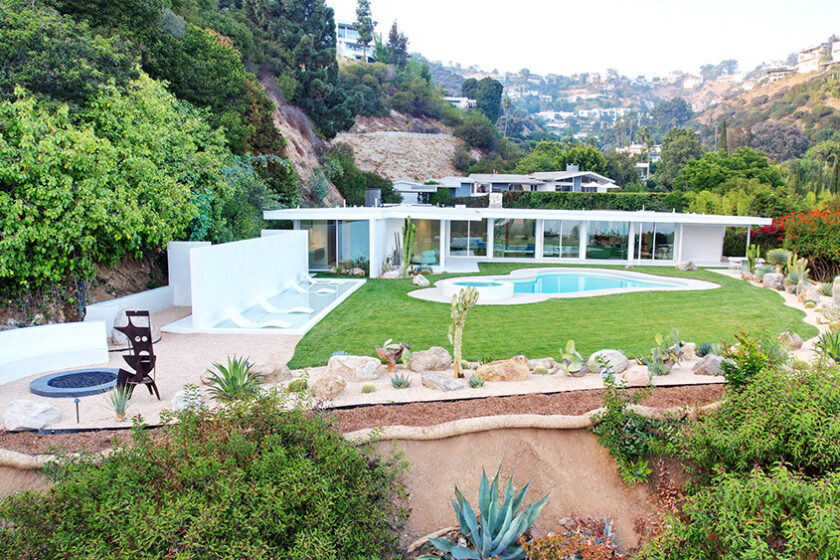
Rising Glen Renovation:
A Midcentury Modern Revival in TerrazzoThe 3,446-square-foot Rising Glen residence in the Hollywood Hills underwent a meticulous renovation that preserves its midcentury modern character while adapting the home for contemporary…
-
 Blog & News
January 1, 2026
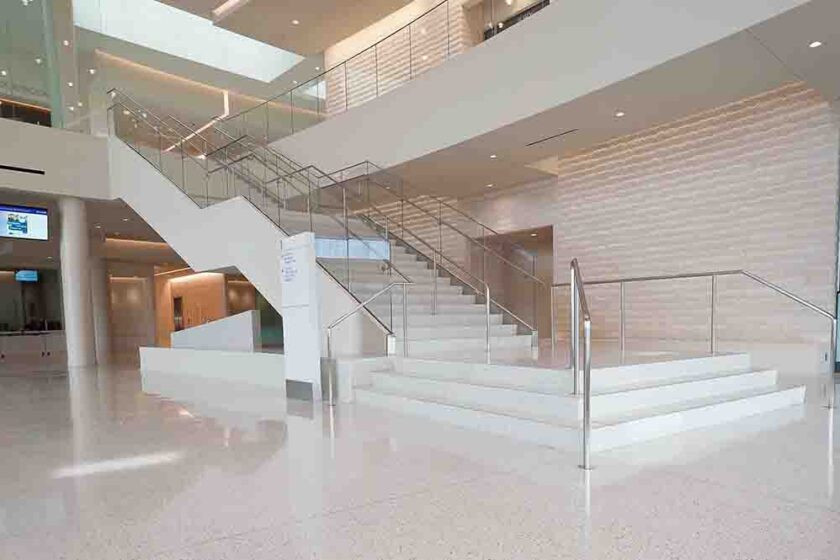
Designing for 100 Years:
How Thoughtful Material Choices Today Build the FutureIn an era when sustainability often focuses on energy performance or recycled content, the question of longevity may sometimes be overlooked. Yet the buildings of…
-
 Blog & News
December 15, 2025
A Winning Design
Agua Caliente Cultural Plaza Casino & Spa/Museum in Palm Springs, California, is a 2023 NTMA Honor Award recipient