
Terrazzo vs Hurricane Ike
When Central Intermediate School was inundated in September 2008, the 1947 structure—and almost everything inside—was destroyed. Hurricane Ike triggered widespread, massive rainfall across northeastern Illinois, causing rivers to reach record flood levels and damaging infrastructure and buildings.
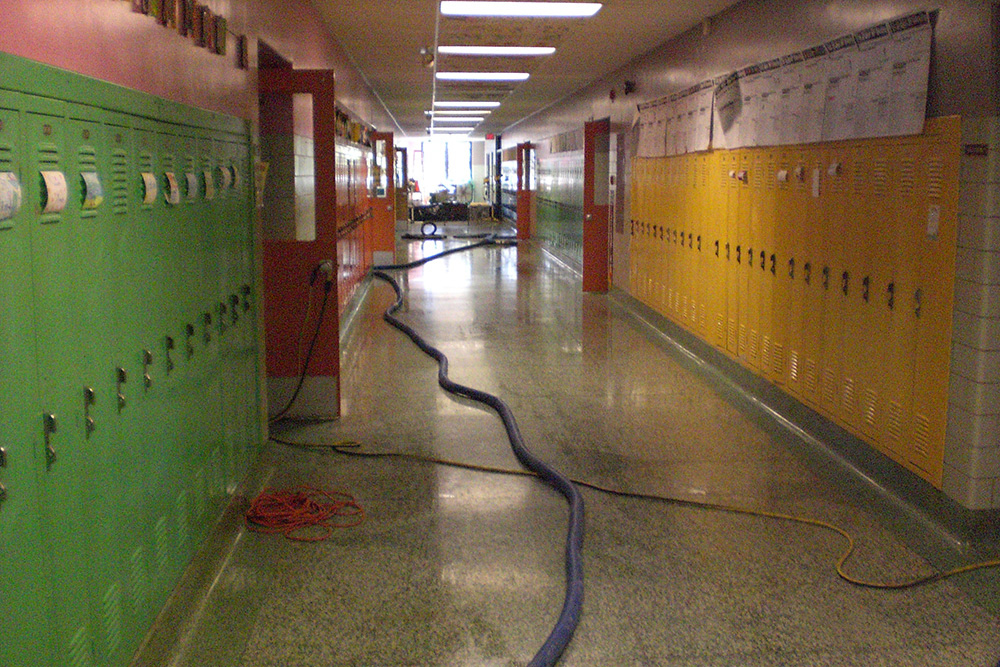
The school’s floors were submerged under just half an inch of water, but it was enough to cause the original asbestos tiles throughout the building to delaminate. One finish that emerged from the flood intact, however, was the original 61-year-old terrazzo in the corridors.
The devastation was so extensive that restoring the building would have been far more costly than rebuilding it. Having experienced terrazzo’s exceptional flood resistance firsthand, along with its low maintenance costs and longevity over 61 years, the school district decided to use it again in the new school building. They also opted to extend its application beyond the corridors, adding it to the cafetorium and restrooms.
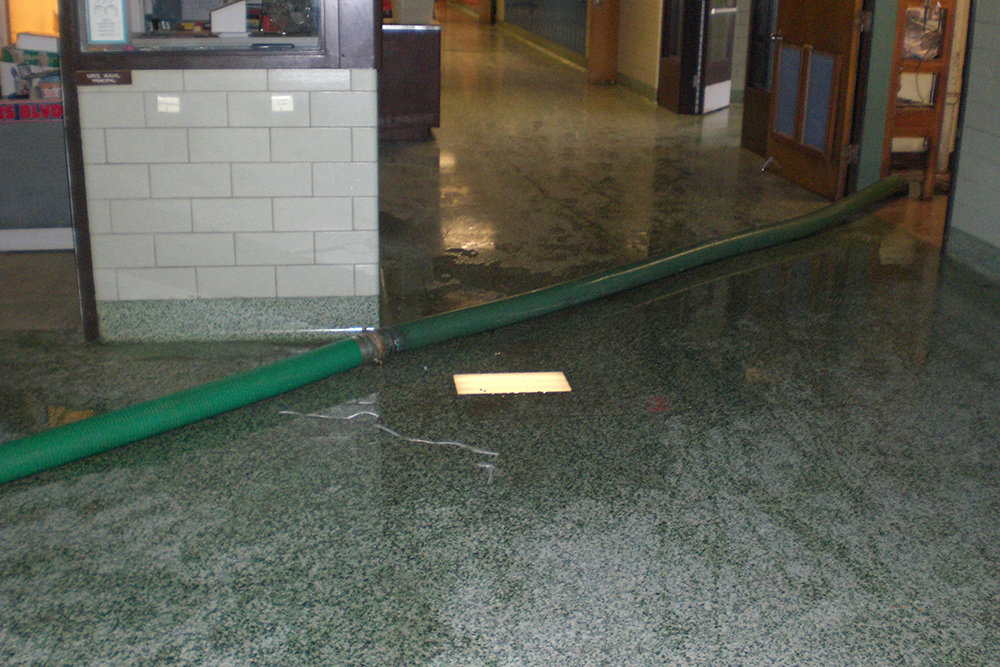
Mr. Reigle added that terrazzo’s “low maintenance and durability are even more important than its flood-proof abilities. The reason most schools use terrazzo is because 50 to 75 years later, it will still look the same as the day it was installed”—just as it did in Central Intermediate School, both before and after the flood.
“That the school district installed terrazzo again in the new building is a testament to their recognition of its longevity and durability,” said George Reigle, project architect with Green/Associates of Deerfield, Illinois, a firm that has completed over 500 school construction projects.
Mr. Reigle explained that terrazzo’s durability stems from its material composition and its poured-in-place installation: “Its durability in the case of Central Intermediate School is extraordinary only in the fact that it’s not extraordinary.”
In response to the threat of weather-related disasters that devastate resources, which in turn significantly impacts the environment, the National Institute of Building Sciences (NIBS) urges the use of resilient building materials. NIBS research indicates that between $6 and $11 can be saved in disaster-related costs for every $1 invested in disaster mitigation aligned with the latest building codes. Materials that are durable against wear and breakage, resistant to moisture and mold growth, and low maintenance reduce the need for replacement and repairs. The use of resilient building materials ultimately lowers the financial and environmental costs of construction, whether or not extraordinary weather events occur.



Read Similar Articles
-
 Blog & News
April 1, 2026
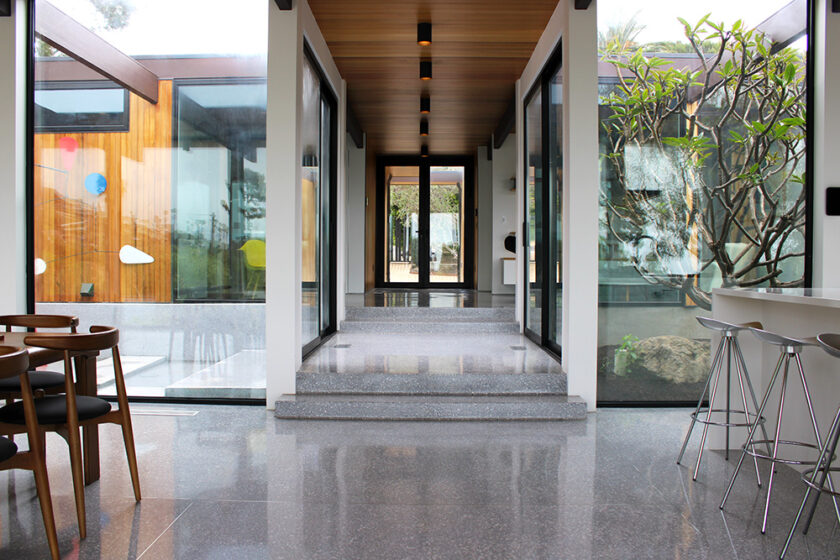
Malibu Glass Box House:
Fire-Resistant Terrazzo in Midcentury Modern DesignRebuilt after the Woolsey Fire, this coastal residence uses bonded cementitious terrazzo for durable, noncombustible surfaces that complement natural light, ocean views, and midcentury modern…
-
 Blog & News
March 15, 2026
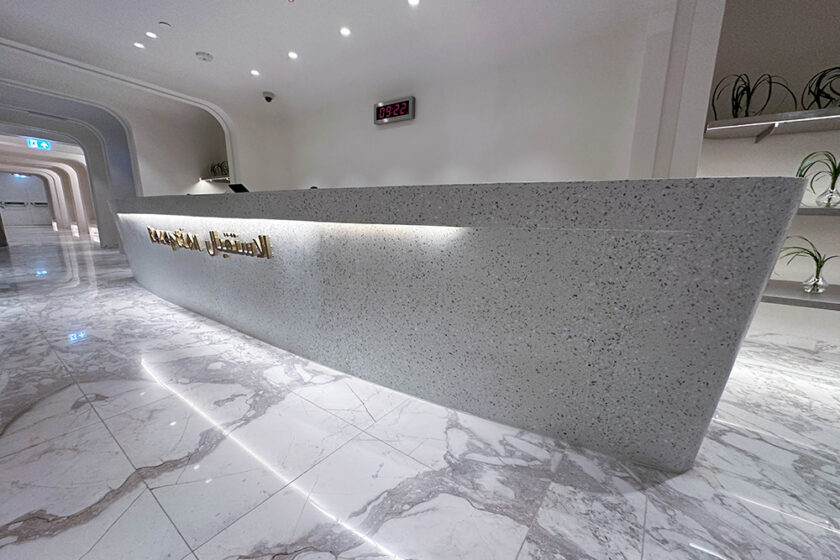
Winning Form: Katara Twin Towers Score on the World Stage
Development scores across design, luxury, and global significance.At Katara Twin Towers, terrazzo serves as a defining architectural element with restrained sophistication, establishing continuity and rhythm throughout the interior. Semi-circular motifs sweep through…
-
 Blog & News
March 1, 2026
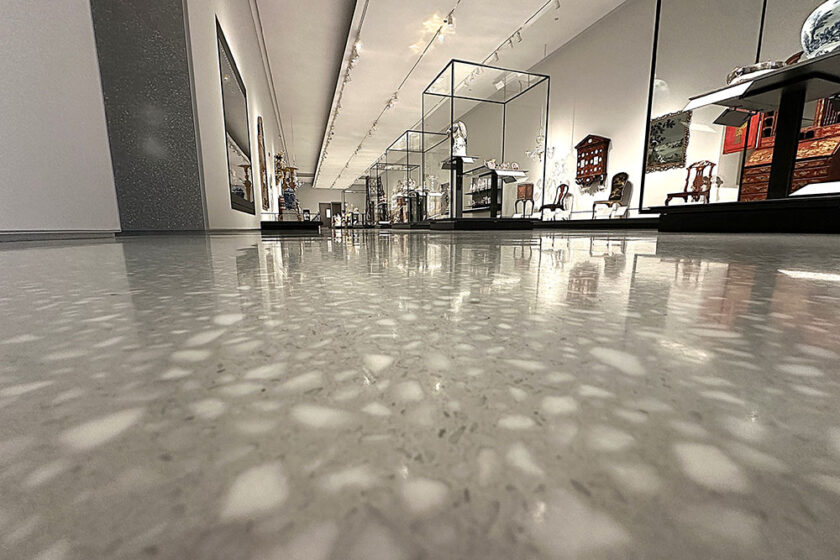
Crucial Substrate Preparation for a Terrazzo Floor
A Guide for Architects and General ContractorsDuring the COVID-19 pandemic, supply chain disruptions were exacerbated by weather-related production halts and plant explosions worldwide, triggering a global shortage of epoxy resin. Traditional…