
Why Hand-Laid Terrazzo Outperforms Prepackaged Flooring in High-Concept Projects
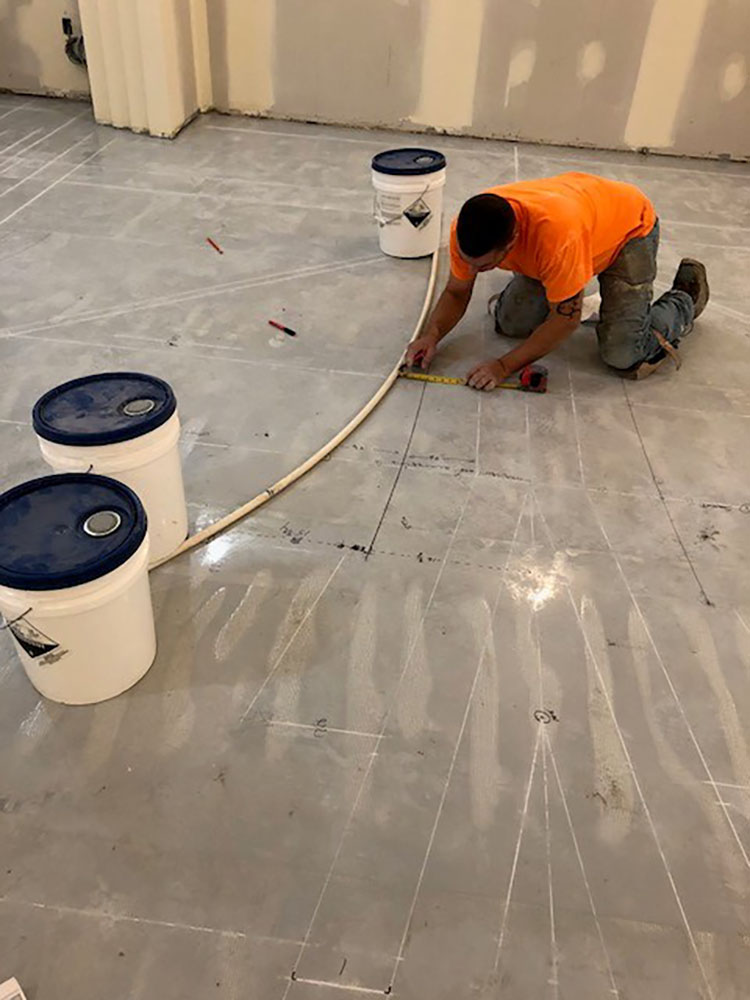
For projects guided by complex design intent, hand-laid terrazzo offers freedoms that manufactured flooring systems cannot. Unlike ceramic, porcelain, or natural stone—which are produced in fixed dimensions and require joints—poured-in-place terrazzo is shaped on site. Patterns can sweep across a floor uninterrupted, curves can follow the architecture, and integrated graphics can be embedded directly into the surface.
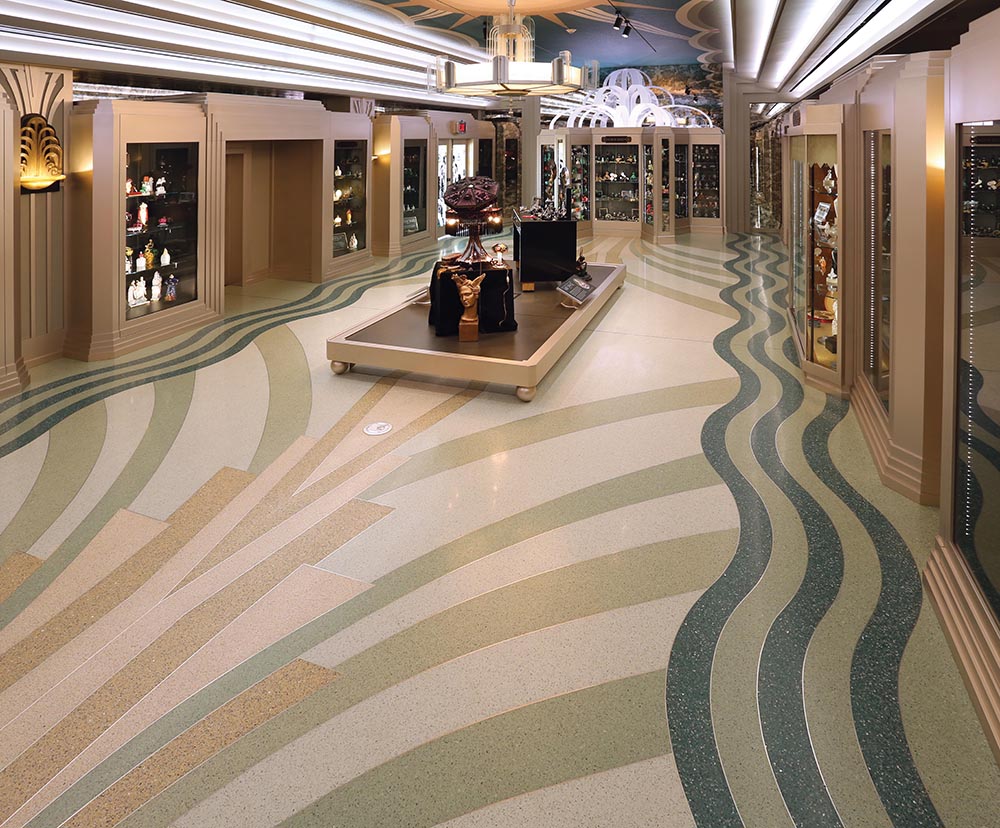
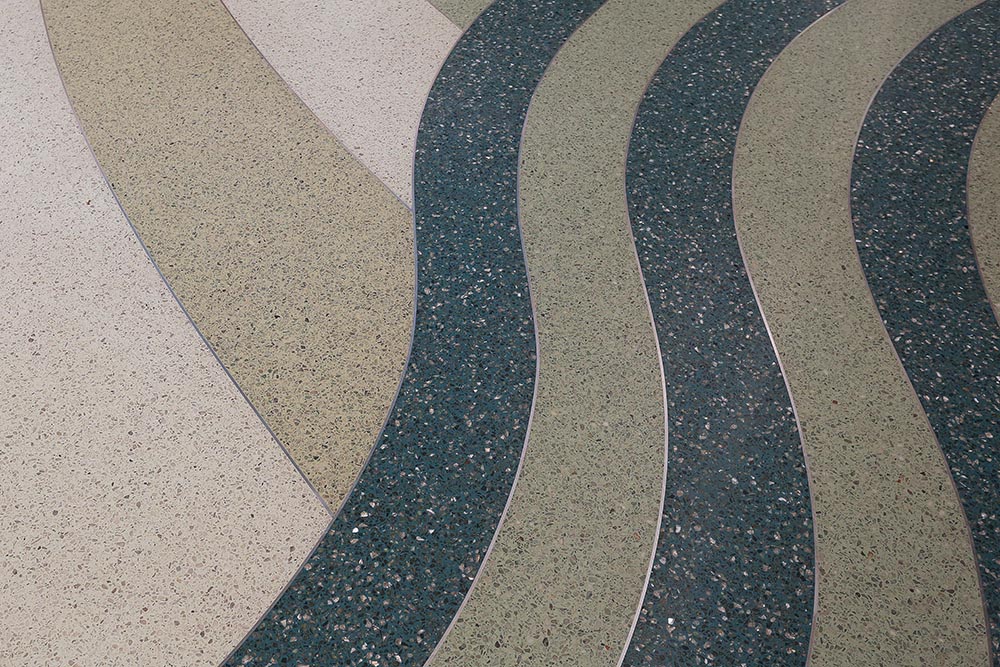
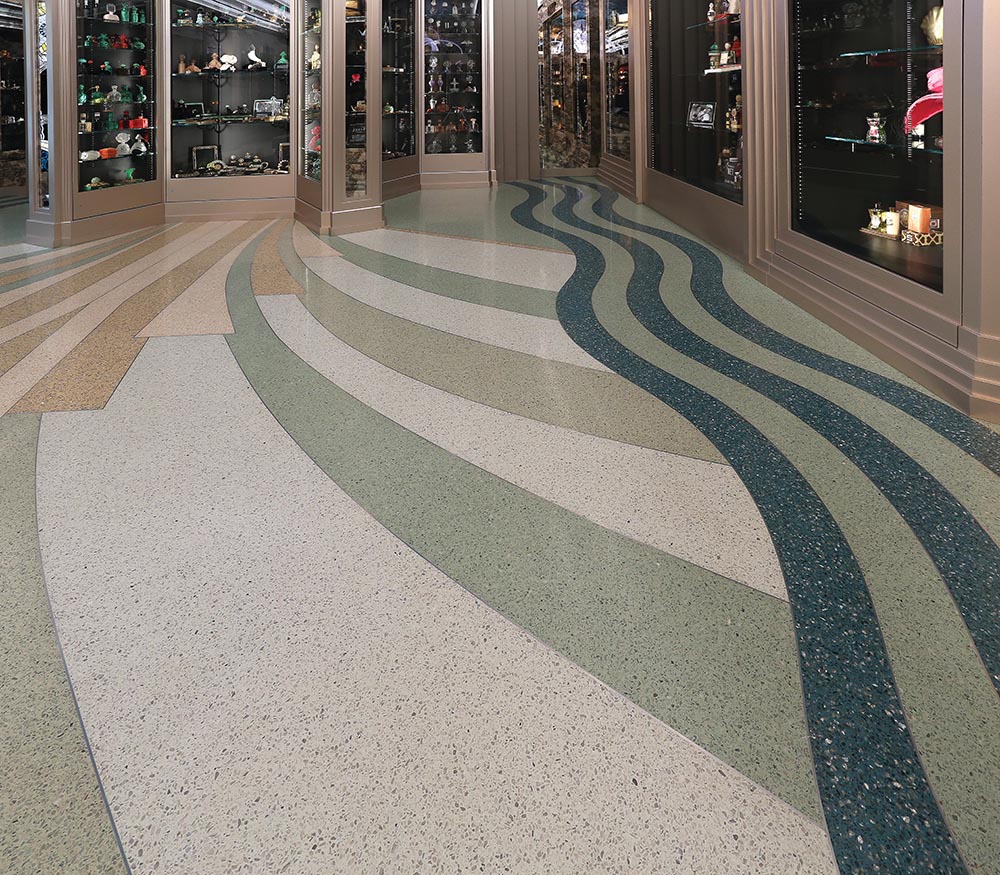
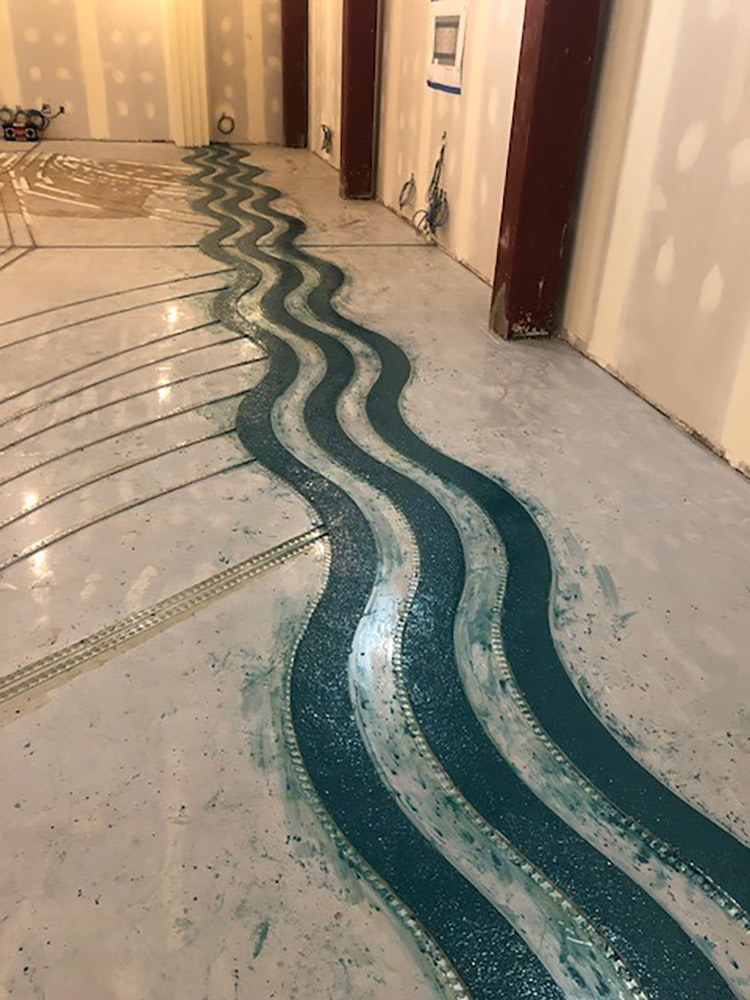
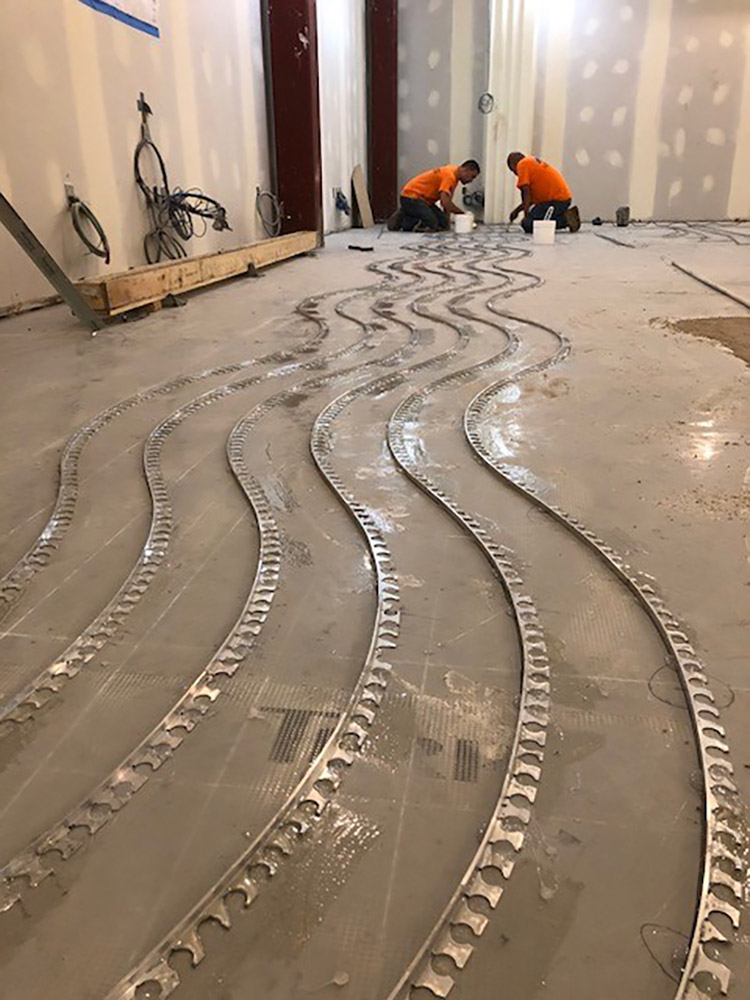
That flexibility makes terrazzo a powerful medium for large-scale compositions as well as intricate detailing. At the Art Deco Gallery in the privately owned Perfume Passage Museum in Barrington Hills, Illinois, the terrazzo team bent aluminum divider strips on site to create a multi-colored, fluid floor.
The architect, Eric Heitman of Heitman Architects in Itasca, Illinois, described the appeal: “The possibilities are endless with terrazzo in terms of colors and aggregates, with wonderful flexibility and the ability to finely tune the texture and activity of the material.
“What I love about terrazzo as a material is its timelessness. It’s been used in each new period of design, every architectural era,” he noted. “It can be used in inventive ways that reflect its time and the creativity of the architects of that time. Furthermore, terrazzo is incredibly durable, so it stands the test of time.”
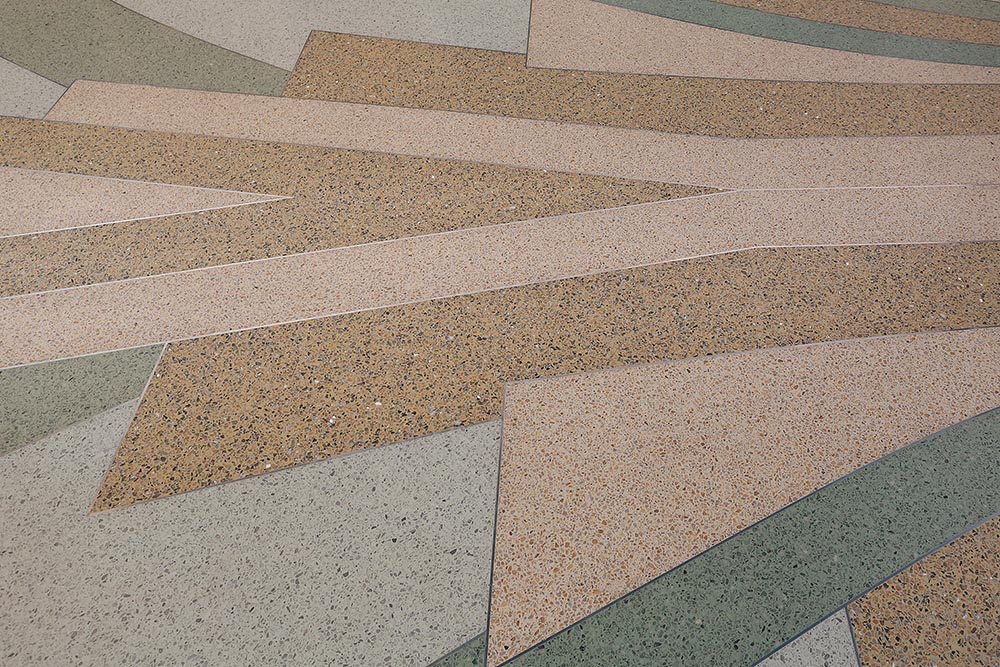
Contrary to its reputation as a material reserved for monumental lobbies, terrazzo adapts easily to spaces of any scale or type. Galleries, boutique retail, restrooms, and residences all benefit from its durability, low-maintenance, and seamless finish. Beyond floors, terrazzo can be used for vertical surfaces, ceilings, counters, and benches, expanding its role as both finish and design medium.
Manufactured materials have their uses, but they impose limitations on geometry, scale, and design continuity. In-situ terrazzo, by contrast, is shaped to the project, supporting designs that demand precision, uninterrupted flow, and creative freedom across the entire space.


Read Similar Articles
-
 Blog & News
April 1, 2026
Malibu Glass Box House:
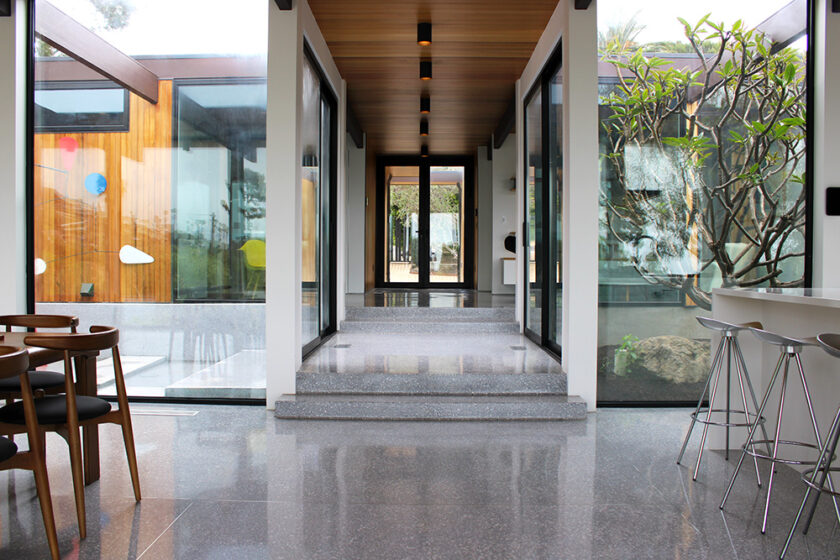
Fire-Resistant Terrazzo in Midcentury Modern DesignRebuilt after the Woolsey Fire, this coastal residence uses bonded cementitious terrazzo for durable, noncombustible surfaces that complement natural light, ocean views, and midcentury modern…
-
 Blog & News
March 15, 2026
Winning Form: Katara Twin Towers Score on the World Stage
Development scores across design, luxury, and global significance.At Katara Twin Towers, terrazzo serves as a defining architectural element with restrained sophistication, establishing continuity and rhythm throughout the interior. Semi-circular motifs sweep through…
-
 Blog & News
March 1, 2026
Crucial Substrate Preparation for a Terrazzo Floor
A Guide for Architects and General ContractorsDuring the COVID-19 pandemic, supply chain disruptions were exacerbated by weather-related production halts and plant explosions worldwide, triggering a global shortage of epoxy resin. Traditional…