
A Guide for Architects and General Contractors
During the COVID-19 pandemic, supply chain disruptions were exacerbated by weather-related production halts and plant explosions worldwide, triggering a global shortage of epoxy resin. Traditional cement-based terrazzo installed with a sand cushion, less commonly used than the epoxy system, was a suitable alternative for some projects during the crisis. Epoxy fill, used for flattening a substrate for terrazzo installation, was another story.
Floor Fill
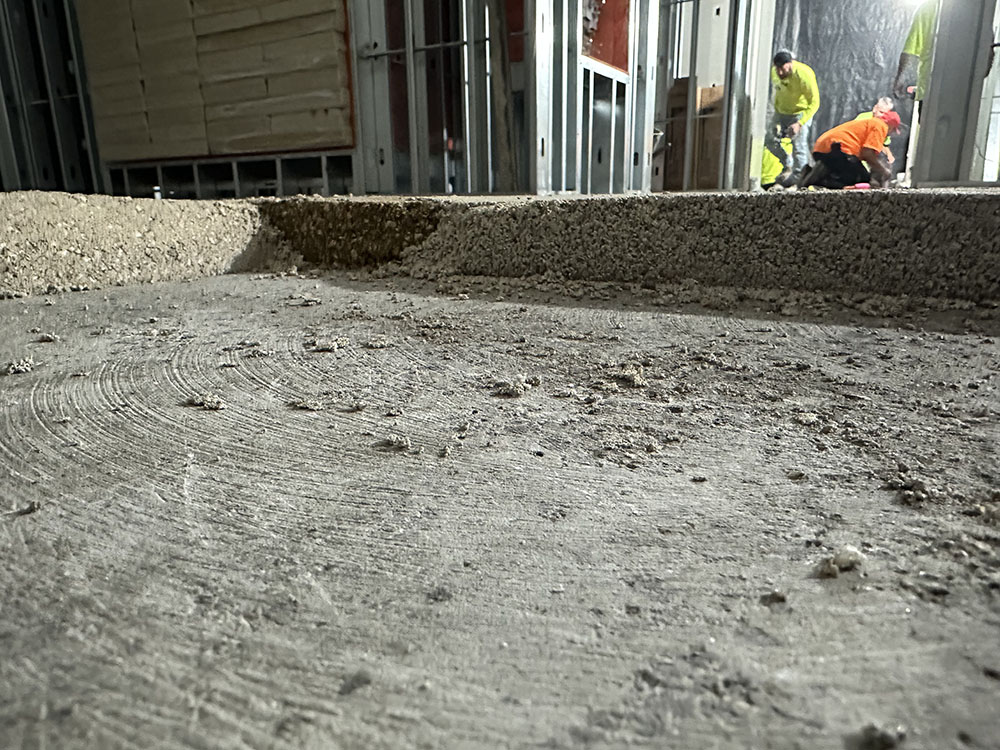
As a poured-in-place material, terrazzo requires a flat substrate to achieve a smooth finish and a durable bond. Proper substrate preparation is critical. National Terrazzo & Mosaic Association (NTMA) specifications require that subfloors meet a tolerance of 1/4 inch in a ten-foot span to ensure a flat finish.
Because a flat, terrazzo-ready concrete substrate is rare, the concrete must typically be adjusted by grinding, filling, or a combination of the two. For years, epoxy mixed with sand, marble, or other appropriate aggregates was the top choice and the most commonly used flattening material for epoxy terrazzo installations. It’s simple to work with, bonds reliably, dries fast (within 24 hours), and can be poured to any thickness. However, extensive fill work can increase project costs.
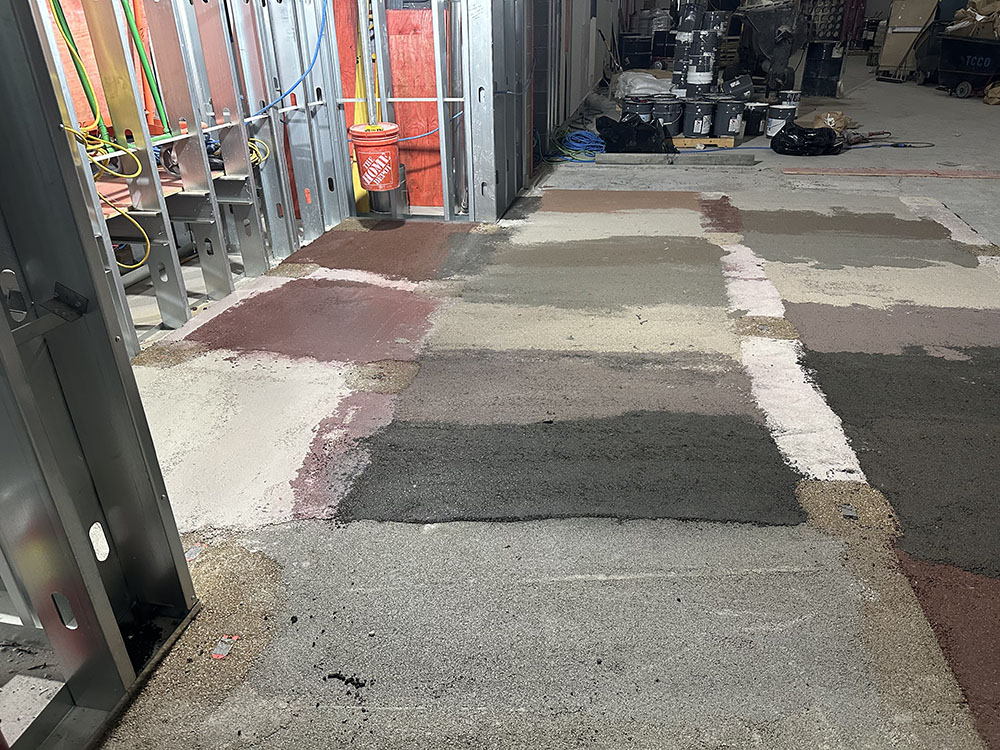
The COVID-era material shortages and the resulting price spike spurred innovation: manufacturers began developing cement-based fill options to meet demand. While these materials are less expensive, not all have been proven suitable for terrazzo installations. Some are prone to internal failures and bonding issues with epoxy terrazzo systems.
Requirements for Cement Leveling Products in Epoxy Terrazzo Installations
Consulting a qualified NTMA terrazzo contractor early in the process helps avoid installation issues and ensures the most cost-effective solutions. Any self-leveling concrete product applied to flatten the substrate for a terrazzo installation must be properly applied to a prepared substrate. It must have a tensile strength of 300 psi and contain no gypsum, which disintegrates during terrazzo grinding.
The disadvantages of cement flattening products include longer drying time—requiring days or weeks to cure before terrazzo can be poured—and may also require moisture vapor control. Cement-based systems are also susceptible to shrinkage and other deformations, necessitating additional filling or grinding to meet the required tolerance. Thickness is limited, and edges cannot be feathered.
Considerations for Architects and General Contractors
Architects and general contractors play a crucial role in ensuring a successful terrazzo installation. They need to:
- Understand the specific requirements for substrate preparation.
- Be aware of the cost implications and potential issues of different fill materials.
- Collaborate closely with terrazzo contractors to determine critical flatness areas and where levelness may be compromised.
- Ensure all parties agree on the substrate preparation method and material choices.
Proper substrate preparation is vital for a terrazzo floor’s performance, longevity, and appearance. Architects and general contractors can ensure a successful installation by working with an NTMA terrazzo contractor, prioritizing flatness, choosing suitable fill materials, and following best practices. Adhering to NTMA guidelines and maintaining clear communication among all parties will result in a durable and beautiful terrazzo floor.


Read Similar Articles
-
 Blog & News
August 15, 2026
Educational Opportunity in Floor Design
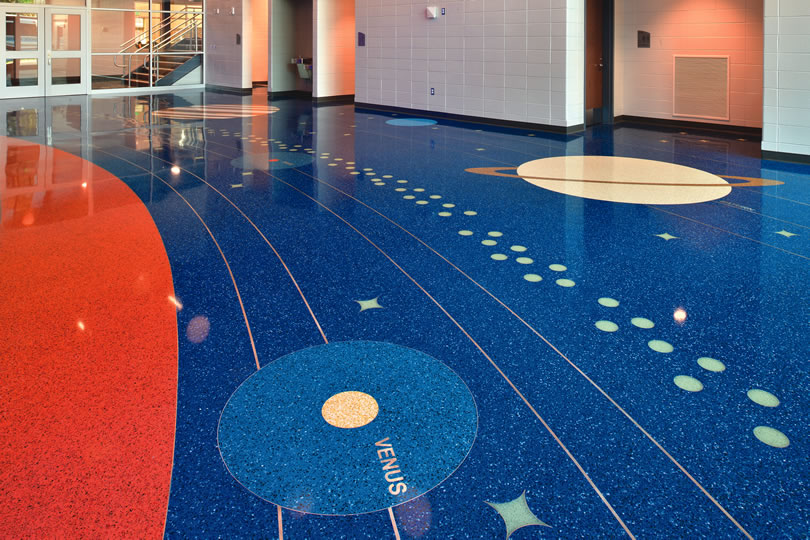
2020 Terrazzo Honor Award Winner: Fairforest Middle School, Spartanburg, SC“When the school district asked us to include a 100-seat planetarium in the design for the new Fairforest Middle School, we were inspired to make…
-
 Blog & News
July 1, 2026
Step Up Your Preservation Game
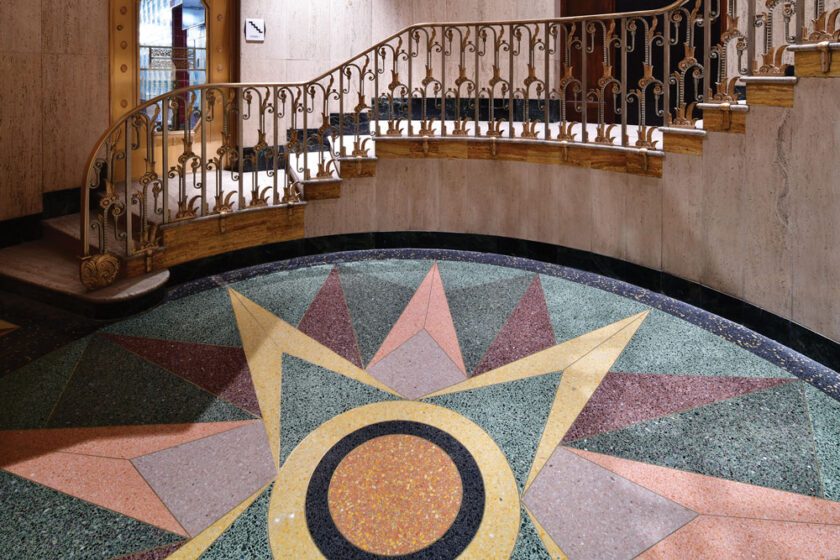
Award-winning terrazzo restorations keep architectural heritage alive.Renovating historic buildings transforms underused spaces into functional, attractive environments while avoiding the costs and environmental impact of demolition. Terrazzo is ideal for this purpose:…
-
 Blog & News
June 15, 2026
Terrazzo Wayfinding
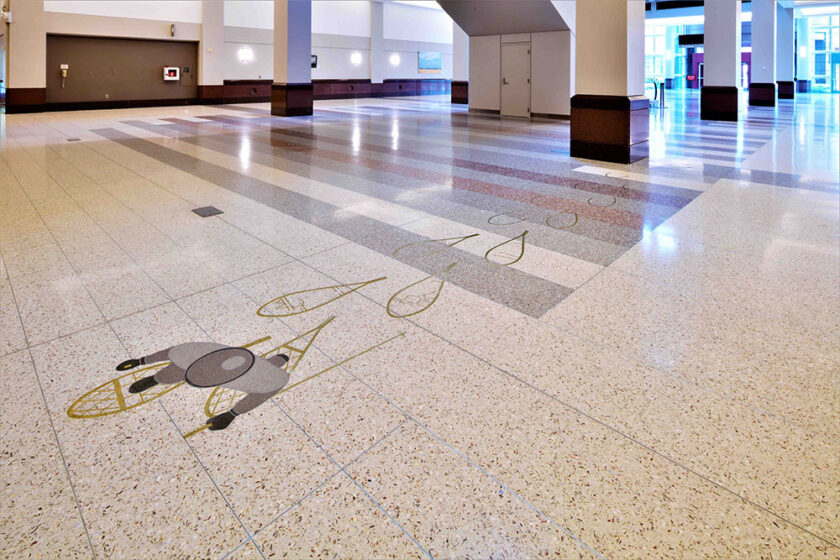
Three Award-Winning ApproachesSome terrazzo floors do more than hold up under foot traffic—they direct movement through a space. From large public spaces to intimate venues, terrazzo’s flexibility…